Should Your Wedding Photographer and Videographer Be the Same Studio?
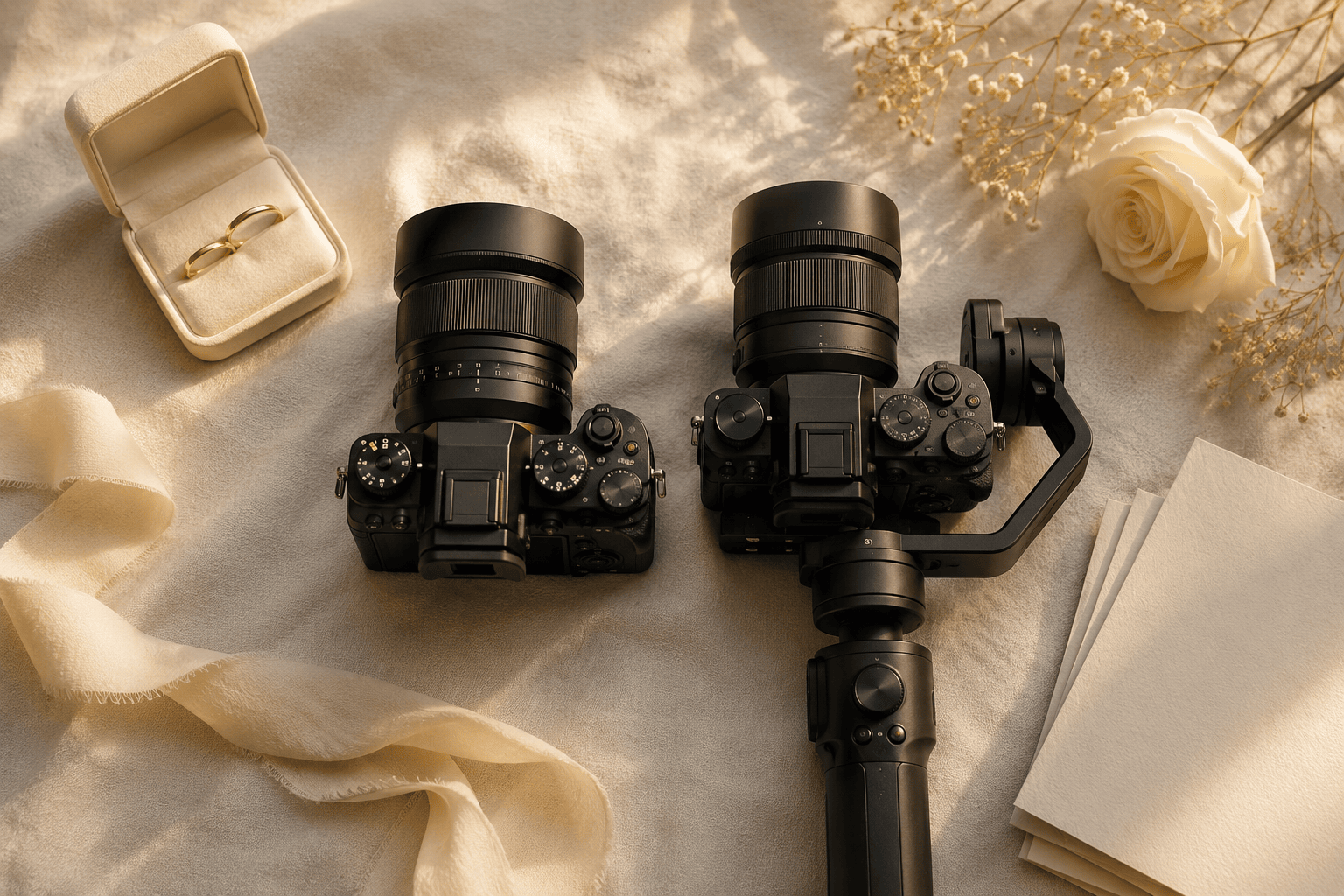
If you have decided you want both photos and a film of your wedding day, there is a second decision waiting behind it: do you book one studio to do both, or hire a photographer and a videographer separately?
It changes your budget, how many people are in your space on the day, and how much coordinating you end up doing yourself. Here is an honest look at both options, including the situations where a combined team is the wrong call.
The short answer
One studio is usually simpler and slightly cheaper. Two separate vendors usually give you more specialist depth and more camera angles.
For most Auckland weddings under about 120 guests, a combined team covers the day well and removes a lot of admin. For large weddings, multi-location days, or couples who want a very specific look in one medium, booking separately can be worth the extra cost and effort.
What one studio actually gets you
One contract, one conversation. A single deposit, one payment schedule, one point of contact, one person to email when your ceremony time moves. It sounds minor until you are eight weeks out and juggling a dozen suppliers.
A team that has worked together before. Photographers and videographers are constantly working around each other, competing for the same position at the aisle, staying out of each other's frame, timing when to move during the vows. A team that shoots together every weekend has already solved that. Two people meeting for the first time on your wedding morning are solving it live.
Photos and film that look like the same day. Colour, grade and mood carry across both when one studio handles them. Booked separately, you can end up with warm golden photographs and a cool, desaturated film of the same afternoon. Neither is wrong, but together they can feel disconnected.
One timeline, built once. Video wants continuous audio and longer takes; photography wants to move quickly through portraits. A combined team plans one schedule that serves both instead of negotiating between two plans on the day. Our wedding day timeline guide walks through what that looks like hour by hour.
Where a single team falls short
This is the part most studios skip, so let us be direct about it.
One person can only be in one place. If you and your partner are getting ready at separate addresses, a single shooter has to choose one, split the morning, or arrive later. Two separate vendors can cover both at once. Ask any studio how they handle this before you book. The answer tells you a lot.
Fewer angles during the moments that matter most. Ceremonies and first dances happen once. More cameras means more reaction shots, more coverage of your guests, and more options in the edit. A smaller combined team is working with less.
The two halves are rarely equally strong. Plenty of studios advertise both and are genuinely good at one. This is the real risk of booking combined, and it is easy to check: look at the photo portfolio and the video portfolio separately, as if they were two different companies. If one feels noticeably thinner, trust that.
You cannot mix and match. Booking separately lets you pair the photographer whose work you love with the filmmaker whose work you love. One studio is a package deal.
The coverage question that actually matters
One studio or two is the question couples ask. The more useful question is how many people will be shooting, and what is each of them doing?
A combined team of two, one on stills and one on film, will generally cover a wedding better than a photographer and a videographer from separate companies who have never met. But a combined team of one person switching between a camera and a gimbal is a genuinely different product, and it should cost noticeably less.
So when you compare quotes, do not compare studio against two vendors. Compare headcount, what each person is responsible for, and what happens during the parts of the day that run in parallel.
What it costs either way
Studios offering both typically price a combined package below the sum of two separate bookings, because it is one travel charge, one planning process and one team on site.
Booked separately, you are looking at two independent quotes. Our wedding photography price guide and wedding videographer price guide break down what each costs on its own.
One warning on comparing prices: a combined quote that comes in dramatically below two separate ones usually means fewer people, fewer hours, or lighter deliverables. That can be exactly right for a small wedding. It is just worth knowing which it is rather than assuming you found a bargain.
Questions to ask before booking a combined team
These five separate the studios that genuinely do both from the ones that added a second service to the website:
- How many people will be shooting, and what is each one covering?
- If we are getting ready in two locations, how do you handle the morning?
- Can I see a photo gallery and a film from the same wedding?
- Who edits the photos and who edits the film?
- What are the separate delivery timelines for photos and video?
That third one is the most revealing and the least often asked. A studio that genuinely shoots both will have plenty of weddings where they can show you both halves of the same day. If they can only show you photos from one wedding and a film from another, ask why.
For vetting the film side specifically, we have covered the questions to ask a wedding videographer before booking in detail.
How we work
Vantirra is a two-person studio, Hugo and Chi, and we shoot photo and video together on the same day, which is the arrangement this article is about. Our packages start from NZD $2,000 and include both.
We would rather you saw the two sides separately and judged them on their own merits, so here is our photography portfolio and our videography portfolio. If one does not feel right for your wedding, booking separately is a perfectly sensible choice and we will happily say so.
You can see what is included at each level on our wedding services page.
Frequently asked questions
Is it cheaper to hire one studio for photo and video?
Usually yes. A combined package is normally priced below two separate bookings because there is one travel charge, one planning process and one team on site. The saving is real but modest. If a combined quote is dramatically cheaper than two separate ones, check whether it is fewer shooters or fewer hours rather than a discount.
Can one person shoot both photo and video at a wedding?
They can, and for small or short weddings it can work well. But one person switching between stills and film captures less of both than two people each doing one, and cannot cover two locations at once. It should be priced accordingly, so ask how many people are shooting before you compare quotes.
Will my photos and video match if I book separately?
Not necessarily. Two vendors edit to their own style, so you can end up with photos and a film that feel like different days. You can reduce the mismatch by sharing reference images with both and introducing them to each other before the wedding.
Is a combined team worse than hiring specialists?
Not automatically, but it varies more. Some studios are strong at both; some added a second service without the same depth. Judge the photo portfolio and the video portfolio separately, and ask to see both from the same wedding.
Do I need to introduce my photographer and videographer if I book separately?
Yes, and do it early. Put them in touch a few weeks out so they can agree on positioning and timings. It costs you one email and prevents most of the on-the-day friction.
Still deciding?
If you have not settled on whether you want film at all yet, start with do you need both a wedding photographer and videographer. And if you are still choosing a venue, our guide to Auckland wedding venues looks at how each one actually photographs and films.
Tell us your date, your vision, or just say hi. Free 30-min consultation, no pitch deck required. Get in touch.